Seafood Hokkien Mee Recipe: Achieving Wok Hei at Home
Prep time: 25 minutes
Cook time: 35–45 minutes
Servings: 2–3 people
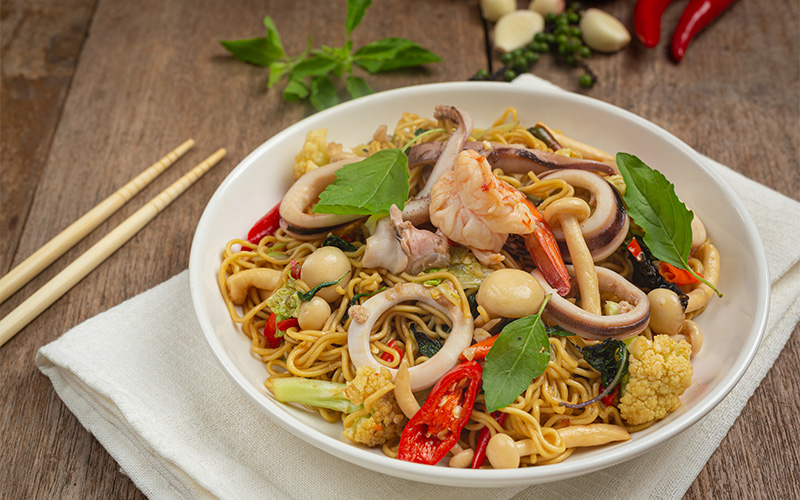
Seafood Hokkien mee is one of Singapore’s most iconic hawker dishes. Smoky, savoury and deeply satisfying, it combines yellow noodles, bee hoon, prawns, squid and a rich prawn-based stock.
This seafood Hokkien mee recipe focuses on a moist, Singapore-style version, where the noodles are fried first, then simmered briefly with prawn stock until savoury, slightly smoky and well-coated rather than soupy.
While full wok hei is difficult to achieve without commercial burners, this recipe prioritises the elements home cooks can control: a hot pan, small-batch frying, gradual stock absorption and light charring.
Key Takeaways
- A good seafood Hokkien mee recipe starts with a rich prawn stock made from prawn heads and shells.
- Wok hei noodles depend on high heat, dry ingredients, quick tossing and controlled charring.
- Fresh prawns and squid improve both the stock and the final seafood flavour.
- Cooking seafood noodles in smaller batches helps reduce steaming and encourages better browning.
- Ordering shellfish online can make it easier to prepare this dish with fresh seafood at home.
Ingredients
- 200g yellow noodles
- 100g bee hoon, soaked and drained
- 200g prawns, shells and heads reserved for stock
- 100g squid, cleaned and sliced
- 2 eggs
- 2 cloves garlic, minced
- 1 tbsp oil
- Salt and pepper to taste
Optional:
- Bean sprouts
- Chives or spring onion
- Sambal chilli
- Calamansi or lime
Step-by-Step Seafood Hokkien Mee Recipe
Before cooking, soak the bee hoon in room-temperature water for about 8 to 10 minutes, just until pliable but not soft. Drain well and set aside.
Loosen the yellow noodles gently with your hands or chopsticks. If they feel oily or have a strong alkaline smell, rinse them briefly under running water, then drain and pat dry as much as possible before frying.
Step 1: Prepare the Prawn Stock
Heat 1 tablespoon of oil in a pot over medium heat. Add the prawn heads and shells, then sauté for 5 to 7 minutes. Press them gently with a spatula to release their juices.
Once the shells turn a deeper orange and smell fragrant, add about 1 litre of water. Bring to a boil, then reduce to a gentle simmer for 20 to 30 minutes.
The stock should become rich, orange and slightly opaque. Skim off any foam, then strain the stock while pressing down on the shells to extract as much flavour as possible. Set aside.
Step 2: Heat the Wok
Heat your wok or wide pan until very hot before adding oil. This helps create the high-heat environment needed for better wok hei.
Step 3: Cook the Aromatics
Add oil and minced garlic. Stir quickly until fragrant, taking care not to burn the garlic.
Step 4: Cook the Seafood
Add the prawns and squid. Stir-fry briefly until just cooked, then remove and set aside. Avoid overcooking, as prawns can turn dry and squid can become rubbery.
Step 5: Fry the Noodles
Add the yellow noodles and bee hoon to the wok. Toss quickly over high heat so the noodles begin to pick up aroma from the wok.
Step 6: Add Stock Gradually
Start with about 400ml of prawn stock for the base recipe. Add it in 2 to 3 rounds, letting the noodles absorb most of the liquid before adding more.
Stop adding stock when the noodles are moist, glossy and well-coated, but not swimming in liquid. For a wetter version, add another 100ml to 150ml of stock. For a drier version, use about 300ml to 350ml and fry slightly longer.
Step 7: Create Wok Hei
Keep the heat high and toss continuously. Let some parts of the noodles sit briefly against the hot surface of the wok so they lightly char without burning.
Step 8: Add the Eggs
Push the noodles to one side. Crack the eggs into the wok, let them set slightly, then mix them through the noodles.
Step 9: Combine Everything
Return the prawns and squid to the wok. Toss well so the seafood, noodles and stock are evenly combined.
Step 10: Final Seasoning
Taste the noodles before serving. Add salt only if the stock needs more savouriness, and finish with a little white pepper for warmth. The final dish should taste savoury, lightly sweet from the prawn stock and gently smoky from the frying.
Serve with sambal chilli and calamansi or lime on the side. The sambal adds heat and depth, while the citrus helps brighten the richness of the noodles.
What Is Wok Hei?
Wok hei refers to the smoky aroma and depth of flavour created through high-heat wok cooking. It is not just about heat alone. It comes from rapid evaporation, light charring and constant tossing.
For Singapore Hokkien mee, wok hei gives the noodles their familiar hawker-style aroma. At home, the goal is not to copy commercial wok cooking exactly, but to create enough heat, dryness and contact with the pan to develop a similar flavour.
Why Prawn Stock Matters
A strong prawn stock is the backbone of this seafood Hokkien mee recipe. It gives the noodles sweetness, umami and depth.
Using prawn heads and shells makes a noticeable difference because they release flavour that plain water or seasoning alone cannot provide. When the stock is added gradually, the noodles absorb that seafood richness while still retaining texture.
Since the stock depends heavily on the flavour from the prawn heads and shells, starting with fresh prawns makes the cooking process much more reliable. For added convenience, many home cooks now turn to buying seafood online when they want fresh prawns delivered for stock-based dishes like Hokkien mee.
Choosing the Right Seafood and Noodles
Prawns are essential because they flavour both the stock and the final dish. Squid adds a tender, slightly bouncy texture, while clams or scallops can be added for a richer seafood version.
For noodles, use a mix of yellow noodles and bee hoon. Yellow noodles provide chewiness, while bee hoon absorbs the prawn stock well and lightens the overall texture.
Pre-Preparation for High-Heat Cooking
High-heat cooking moves quickly, so prepare everything before you start. Peel the prawns, slice the squid, soak the bee hoon, mince the garlic and keep the strained stock nearby.
Dry the seafood and noodles as much as possible. Excess moisture creates steam, which makes it harder to achieve wok hei noodles. A wide pan or wok also helps because it gives the ingredients more surface contact.
Tips for Achieving Wok Hei at Home
Preheat your wok thoroughly before cooking. The surface should be very hot before you add oil.
Cook quickly and avoid overcrowding the pan. If needed, prepare the dish in smaller portions so the noodles fry instead of steam.
Add stock gradually rather than all at once. This allows the noodles to absorb flavour while still developing light charring.
Let the noodles sit briefly against the wok before tossing again. This helps create the smoky, slightly charred flavour associated with Hokkien mee.
Variations to Try
For a wet-style Hokkien mee, add slightly more stock and keep the noodles saucier.
For a drier version, reduce the liquid and increase the frying time slightly for a smokier finish.
For a seafood upgrade, add clams, scallops or extra squid. Serve with sambal chilli if you prefer more heat.
For an easy meal with prawns, keep the recipe simple with just prawns, squid and noodles instead of adding extra seafood.
What to Serve with Hokkien Mee
Seafood Hokkien mee is best served with sambal chilli and calamansi or lime. The chilli adds heat, while the citrus cuts through the richness of the noodles.
You can also pair it with simple vegetable sides to keep the meal balanced without overpowering the main dish.
Fresh Seafood for Better Results
For this recipe, it helps to plan around seafood that is practical for home cooking. Prawns with heads and shells are useful for making stock, while cleaned squid saves time during preparation and reduces the need for extra handling before high-heat cooking.
Catch of The Day SG offers seafood options suited for home recipes like Hokkien mee, whether you need prawns for stock, squid for texture or convenient portions for family meals.
Explore our selection or contact us to place your order today.
Frequently Asked Questions
Can I use a non-stick pan instead of a wok?
Yes, but avoid overheating an empty non-stick pan for too long. Use medium-high heat instead of extreme high heat, and cook in smaller portions to improve browning.
Why does my Hokkien mee turn too soggy?
This usually happens when too much stock is added at once or when the noodles are overcrowded in the pan. Add stock gradually and let the noodles absorb most of the liquid before adding more.
Can I prepare the prawn stock ahead of time?
Yes. You can prepare the stock a day in advance and keep it chilled in the fridge. Reheat it before adding it to the noodles.
How do I prevent squid from becoming rubbery?
Cook squid briefly over high heat, then remove it from the wok before frying the noodles. Add it back near the end so it does not overcook.
Can I make seafood Hokkien mee without pork lard?
Yes. Pork lard adds richness, but this recipe can still work with regular cooking oil. For more aroma, use enough garlic and allow the noodles to lightly char during frying.