How We Use Salmon Fish Fillet to Make Healthy Meal Prep Easier
Key Takeaways
- Salmon fish fillet meal prep works best when you plan which portions will be refrigerated and which should be frozen.
- We recommend keeping sauces, raw vegetables, slaws, herbs, and tortillas separate so their textures hold up through the week.
- Cook salmon only until safely done, since it will receive more heat when reheated.
- Cool cooked food promptly, refrigerate it below 5°C, and reheat each portion thoroughly only once.
- Heat grains and vegetables first, then add salmon near the end to reduce drying.
- Choosing fresh seafood from a reliable supplier in Singapore gives you firmer-textured salmon with a cleaner flavour, helping each prepared portion remain more enjoyable after cooking, chilling, and reheating.
Introduction
Our customers often ask how to prepare healthier weekday meals without spending an entire Sunday in the kitchen. It is a relevant concern in Singapore, where employed residents worked an average of 41.4 hours a week in 2025 before commuting, and family responsibilities are considered.
This is why we often recommend meal prep using salmon fillet. Salmon cooks quickly and pairs naturally with rice, quinoa, vegetables, or salad. A small batch can become several different lunches.
From our experience supplying seafood to local households, good salmon fish fillet meal prep depends on choosing similar cuts, avoiding overcooking, cooling food promptly, and separating ingredients that release moisture. This is how we make the process practical.
Why Salmon Fillets Work for Meal Prep
We like salmon fillets because they remove scaling, gutting, and portioning. Similar-sized pieces also cook more consistently on the same tray.
Customers choosing boneless fish often tell us that this ready-to-cook format makes weekday planning easier and less messy.
Salmon also fits comfortably into local healthy meal planning. A practical Singapore reference is the quarter-quarter-half approach: a quarter plate of wholegrains, a quarter plate of protein such as fish, and half a plate of fruit and vegetables.
We normally use salmon fish fillet meal prep for two to four meals, then rotate other proteins through the week. This gives you variety and avoids leaving cooked fish in the refrigerator longer than necessary.
Our Salmon Fish Fillet Meal Prep Method
1. Plan by Eating Day
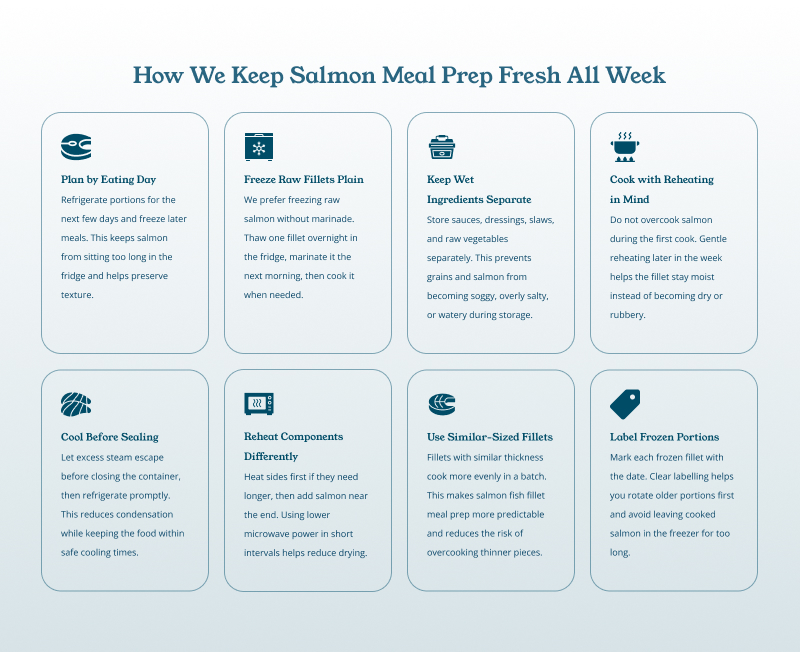
Before cooking, we decide when every portion will be eaten. For salmon fish fillet meal prep, we generally refrigerate meals intended for the next three days and freeze any later portions once it has cooled properly.
A Sunday batch might cover Monday to Wednesday, with one fillet frozen for Thursday. This is more dependable than expecting five refrigerated portions to retain the same quality.
2. Choose Similar Fillets
We look for firm flesh, an even colour, and a clean smell. Dry edges, excessive liquid, or a sharp odour are signs we would avoid.
A thin tail piece will finish before a thick centre cut. Check thinner pieces early and remove them as soon as they are ready. This is one reason salmon fish fillet meal prep is easier with pre-portioned fillets.
If you prefer to buy seafood online, check the listed portion size and cut before ordering. Fillets of a similar weight and thickness are easier to batch-cook because they are more likely to reach the right doneness at approximately the same time.
3. Season According to How You Will Store the Salmon
The right seasoning approach depends on whether you plan to refrigerate cooked salmon or freeze the fillets raw.
For Cooked Salmon Stored in the Fridge
Cooked marinated salmon may taste slightly more savoury after a day or two in the refrigerator as the surface juices and seasoning redistribute. The flavour does not usually become dramatically stronger, but salty or acidic marinades can become more noticeable as the outside of the fillet gradually loses moisture.
For salmon fish fillet meal prep, we therefore recommend seasoning the fish moderately before cooking and keeping additional sauce, lemon juice, herbs, or sesame seeds separate. We add these finishing ingredients shortly before serving so that later portions do not taste overly salty, acidic, or heavy.
The outer edges of cooked salmon may also become slightly drier during refrigeration. Keeping the fillet whole, storing it in a tightly sealed container, and reheating it gently can help it retain more moisture.
For Raw Salmon Stored in the Freezer
When we freeze raw salmon fillets, we prefer to freeze them plain rather than leaving them in a marinade. Freezing slows the changes caused by marination, but it can still affect the texture of the fish. As ice crystals form, some of the salmon’s cells can be damaged, allowing more liquid to escape when the fillet thaws.
Acidic marinades containing ingredients such as lemon juice, lime juice, or vinegar can soften the surface of salmon. If the fillet is marinated before freezing and then left sitting in that mixture as it thaws, the exterior may become overly soft or mushy.
This is why we prefer the following approach:
- Freeze each raw salmon fillet individually without marinade.
- Transfer one fillet to the refrigerator the night before you plan to eat it.
- Once thawed, add the marinade in the morning.
- Return the covered salmon to the refrigerator while it marinates.
- Cook it shortly before lunch or dinner.
Small frozen portions can often thaw overnight in the refrigerator, which keeps them at a safe and consistent temperature. Raw seafood should also be marinated in the refrigerator rather than on the kitchen counter.
We find that this method gives us better control over both flavour and texture. It also lets you change the seasoning for each fillet rather than committing the entire frozen batch to one marinade.
4. Cook with Reheating in Mind
Salmon often becomes rubbery because it is cooked for too long initially and then microwaved on full power.
We begin checking each fillet several minutes before the estimated cooking time ends. Fish should reach an internal temperature of about 63°C at its thickest point. Remove it once safely cooked rather than leaving it in the oven for unnecessary extra browning.
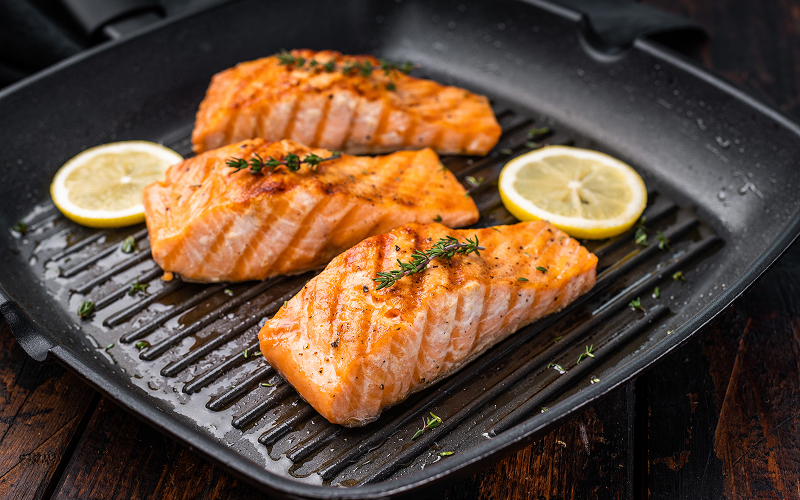
For batch salmon fish fillet meal prep, we prefer baking because several portions cook evenly. Air frying suits one or two fillets, while pan-searing adds browning, although crisp skin will soften in the refrigerator.
When comparing different ways to cook salmon fish, consider how the chosen method will affect the fillet after refrigeration. Baking tends to produce the most consistent results for several portions, while pan-seared skin will usually lose its crispness once stored.
5. Cool and Pack Promptly
Closing a lid over piping-hot food traps condensation. We divide the food into shallow containers, let the first steam escape, and refrigerate it promptly.
Cooked food should be refrigerated or frozen within two hours and kept below 5°C. When it is time to eat, follow the current food safety guidance for stored cooked food: reheat it thoroughly until steaming hot, aim for at least 75°C for two minutes, and do not reheat the same portion more than once.
We prefer tight-lidded glass containers for salmon fish fillet meal prep because, in our experience, they are less likely than some plastics to retain odours. Label each container with its cooking date and whether it was refrigerated or frozen.
How We Freeze, Thaw, and Reheat Salmon
Freezing cooked salmon is useful when salmon fish fillet meal prep extends beyond the first half of the week.
Once the fish has cooled promptly, wrap each fillet tightly or place it in a close-fitting freezer-safe container. Remove excess air, label it, and freeze it separately from other ingredients that become watery or separated after thawing, such as vegetables.
For better quality, we use frozen cooked salmon within about three months. Move it to the refrigerator the night before rather than thawing it on the counter.
When reheating, warm any accompanying grains, cooked vegetables, or other side dishes first if they require more time. Add the salmon during the final stage, cover the container, and use a lower microwave power in short intervals until the whole meal is steaming hot. A teaspoon of water, stock, or reserved sauce placed beside the fish can help create gentle steam and reduce drying.
This approach makes salmon fish fillet meal prep more forgiving than heating every component together for a uniform length of time.
Three Salmon Meal Prep Recipes We Use
These salmon fish fillet meal preps use familiar ingredients, store predictably, and can be adapted to suit your household.
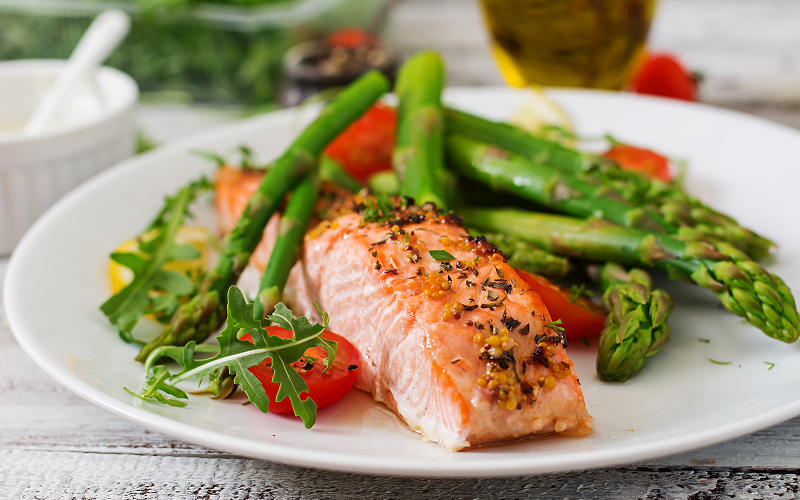
1. Mediterranean Baked Salmon with Quinoa
Prep time: 15 minutes
Cook time: 20 minutes
Serves: 3
Ingredients
For the salmon
- 3 salmon fillets, about 150g each
- 1½ tablespoons olive oil
- 1 tablespoon lemon juice
- 2 garlic cloves, minced
- 1 teaspoon dried dill
- ½ teaspoon salt
- Black pepper
For the quinoa salad
- 1 cup uncooked quinoa
- 2 cups water or low-sodium stock
- ½ cucumber, diced
- 200g cherry tomatoes, halved
- 60g feta, crumbled
- 2 tablespoons chopped parsley
For the dressing
- 2 tablespoons olive oil
- 1½ tablespoons lemon juice
- ½ teaspoon dried oregano
- Salt and pepper
Method
- Rinse the quinoa, simmer it with the water or stock for about 15 minutes, rest it covered for five minutes, then fluff.
- Preheat the oven to 190°C.
- Mix the olive oil, lemon juice, garlic, dill, salt, and pepper.
- Pat the salmon dry, brush it lightly with the mixture, and place it skin-side down on a lined tray.
- Bake for 10 to 14 minutes, checking thinner pieces first.
- Whisk the dressing separately and divide the cooled quinoa between three containers.
How We Pack It
For this salmon fish fillet meal prep, we pack salmon and plain quinoa together. The cucumber, tomatoes, feta, parsley, and dressing stay separate.
Quinoa absorbs liquid from cut vegetables. Freeze only the salmon and plain quinoa because cucumber and tomato become watery after thawing.
2. Teriyaki Salmon Rice Bowl
Prep time: 15 minutes
Cook time: 20 minutes
Serves: 3
Ingredients
- 3 salmon fillets, about 150g each
- 3 tablespoons reduced-sodium soy sauce
- 1½ tablespoons honey
- 1 tablespoon rice vinegar
- 1 teaspoon sesame oil
- 2 teaspoons grated ginger
- 2 garlic cloves, minced
- 2 tablespoons water
- 1 cup uncooked rice
- 2 cups broccoli florets
- 1 carrot, sliced
- 1 cup edamame, snap peas, or chopped chye sim
Method
- Cook the rice according to its package instructions.
- Mix the soy sauce, honey, rice vinegar, sesame oil, ginger, garlic, and water.
- Divide the sauce before it touches raw fish. Use one half as the glaze and reserve the clean half.
- Bake the glazed salmon at 200°C for 10 to 12 minutes.
- Simmer the reserved sauce for two to three minutes.
- Steam or stir-fry the vegetables until just tender.
- Divide the rice, vegetables, and salmon between three containers as they cool.
How We Pack It
Keep the finishing sauce separate and leave the vegetables slightly firm because reheating will soften them further.
For frozen salmon fish fillet meal prep, we pack salmon and rice separately when possible, then add freshly cooked or blanched vegetables after thawing.
3. Salmon Tacos with Dry Cabbage Slaw
Prep time: 15 minutes
Cook time: 12 minutes
Serves: 3
Ingredients
For the salmon
- 3 salmon fillets, about 150g each
- 1 teaspoon paprika
- 1 teaspoon ground cumin
- ½ teaspoon garlic powder
- ½ teaspoon salt
- Black pepper
- 1 tablespoon oil
For serving
- 2 cups shredded cabbage
- 1 small carrot, grated
- 120g plain Greek yoghurt
- Juice of 1 lime
- 9 small tortillas
- Coriander and lime wedges, optional
Method
- Combine the paprika, cumin, garlic powder, salt, and pepper.
- Pat the salmon dry and coat it with the seasoning.
- Pan-sear skin-side down for four to five minutes. Turn and cook for another two to four minutes.
- Rest briefly, then flake into large pieces.
- Mix the cabbage and carrot without seasoning.
- Combine the yoghurt and lime juice separately.
- Warm the tortillas only when serving.
How We Pack It
Store the salmon, dry slaw, yoghurt sauce, and tortillas separately. Lime and salt draw moisture from cabbage, while tortillas become gummy beside chilled fish.
For this recipe. we recommend freezing only the salmon. The slaw and yoghurt sauce can be refrigerated separately in airtight containers and added when serving. We do not recommend freezing them because the yoghurt can separate, while the slaw may become watery and lose its crunch after thawing. This salmon fish fillet meal prep can also be eaten cold when the fish has been cooked, cooled, transported, and refrigerated safely.
In a Nutshell: What We Keep Separate
In summary, one of our most useful meal prep ideas is to pack ingredients according to how they change in storage.
Sauces and dressings: Teriyaki sauce, vinaigrette, and yoghurt-based dressings continue soaking into fish and grains. Store them in small containers and add them after reheating.
Cucumber and tomatoes: Once cut, these release water. Keep them away from rice, quinoa, and salmon until serving.
Cabbage slaw and herbs: Undressed cabbage stores better than salted or lime-dressed slaw. Add coriander, parsley, or spring onion after reheating for fresher flavour.
Tortillas and crisp toppings: Tortillas become damp beside chilled food. Nuts, seeds, and crispy onions also lose their texture, so pack them separately.
Rice and quinoa: These store and freeze relatively well but need prompt cooling. Spread them into shallow portions instead of leaving a large pot on the counter, especially in Singapore’s warm climate.
Separate packing helps salmon fish fillet meal prep taste closer to a freshly assembled meal.
Common Mistakes We Avoid
The most common problems are preparing five refrigerated portions at once, overcooking the first batch, sealing very hot food, adding all sauces on Sunday, and reheating every component for the same length of time.
We freeze later meals, cool food promptly, store finishing sauces separately, and heat rice before returning the salmon. Avoiding these errors makes salmon fish fillet meal prep reliable rather than merely convenient.
Making Healthy Meal Prep Easier with Catch of the Day SG
At Catch of the Day SG, we see salmon fish fillet meal prep as a system rather than one recipe. The right fillet saves preparation time, while thoughtful portioning, separate sauces, prompt cooling, and gentle reheating help each meal stay enjoyable.
As a second-generation seafood business based at Jurong Fishery Port, we make meal preparation simpler by offering cleaned, portioned, and ready-to-cook salmon fillets delivered directly to homes across the island. This gives you a convenient starting point for planning rice bowls, salads, tacos, and other weekday meals without having to scale, cut, or portion the fish yourself.
To find salmon fillets and other seafood that suit your weekly meal plan, browse our seafood.
Frequently Asked Questions
How long do we keep cooked salmon in the refrigerator?
We plan around three days for quality, although properly handled cooked fish may generally be kept for three to four days. Freeze later portions.
Is fresh or frozen salmon better?
Both work well. Frozen individual fillets let you thaw only what you need, while fresh fillets are convenient when the whole batch will be cooked soon after delivery.
Can prepared salmon be eaten cold?
Yes, provided it was properly cooked, cooled, transported, and refrigerated. It works well in salads, grain bowls, and tacos.
Which cooking method reheats best?
We find baking the most consistent for salmon fish fillet meal prep because it cooks several portions evenly and does not depend on preserving a crisp crust.
Can the same system be used for other fish?
Yes. Many storage and portioning principles apply to seabass, snapper, and threadfin. Cooking times differ, so explore different ways to cook salmon fish and other species rather than using one timing for every fillet.