Teochew Steamed Pomfret Recipe: A Comforting Home-Style Dish
Key Takeaways
- This Teochew steamed pomfret recipe highlights the natural sweetness of pomfret with light seasoning and balanced flavours.
- Preserved vegetables, sour plums, and tomatoes create the signature sweet-savoury-tangy profile associated with traditional Teochew cuisine.
- White pomfret remains one of the most popular fish choices for steaming due to its delicate texture and mild flavour.
- Understanding the price of pomfret fish can help home cooks plan meals more effectively, especially during festive periods when prices may fluctuate.
- Ordering through fresh seafood delivery services in Singapore makes it easier to enjoy quality fish dishes at home without visiting wet markets.
A Dish Rooted in Simplicity and Balance
Prep time: 15 minutes
Cook time: 10 minutes
Servings: 2–3 people
Teochew cuisine is often described as having restrained, light, delicate flavours.
Families that grow up in homes centred on Teochew cuisine will instantly recognise that, at its heart, it celebrates the natural flavours of its ingredients, often by giving fresh ingredients ample room to take the lead.
This is exactly what makes a Teochew steamed pomfret recipe such a beloved dish across generations.
In many Singapore homes, this dish is often prepared when dinner calls for a comforting yet nourishing meal.
It is light, easy to prepare, and deeply satisfying. The addition of preserved vegetables and sour plums introduces a subtle savoury tang that complements the fish and helps create the characteristic broth that develops during steaming.
Unlike heavily seasoned seafood dishes, Teochew-style steamed fish relies on a small number of ingredients working together to create balance. The result is a dish that feels both comforting and satisfying while keeping the fish’s freshness as the focal point.
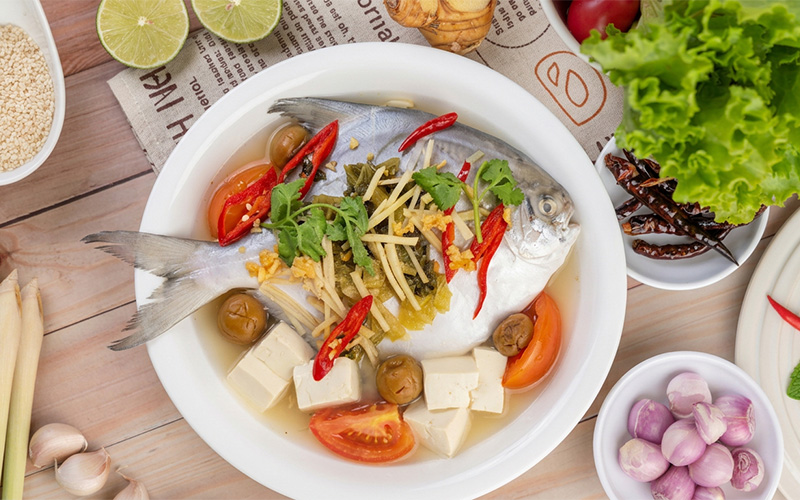
Understanding the Key Ingredients
Before preparing this Teochew steamed pomfret recipe, it helps to understand how each ingredient contributes to the final dish.
Pomfret
The fish serves as the canvas for the dish’s delicate balance of savoury, tangy, and aromatic flavours. During steaming, it releases natural juices that form the base of the accompanying broth.
Salted Mustard Greens (Kiam Chye)
This ingredient contributes savoury depth and a subtle fermented note that forms part of the dish’s signature flavour.
Sour Plums
Sour plums provide the characteristic tanginess associated with Teochew-style steamed fish. They help balance the richness of the fish and the saltiness of the preserved vegetables.
Ginger
Ginger adds fragrance and freshness while complementing the fish’s natural sweetness.
Tomatoes
While not mandatory, tomatoes are commonly used in many family versions of the dish. They contribute gentle sweetness and acidity to the broth.
Shaoxing Wine
Used sparingly, the wine adds aromatic complexity and enhances the overall flavour profile.
Pre-Preparation: Setting Yourself Up for Success
A successful Teochew steamed pomfret recipe starts with proper preparation.
Before steaming begins, a few simple preparation steps can help ensure the fish cooks evenly and the flavours remain balanced.
Select Fresh Pomfret
Look for:
- Bright, clear eyes
- Firm flesh
- Shiny skin
- Fresh red gills
- Clean ocean scent
The fresher the fish, the better the final result.
For home cooks who may not have easy access to a trusted fishmonger, many now choose to buy fish online in Singapore, allowing them to compare species, sizes, and preparation options before placing an order.
Clean the Fish Properly
Remove scales, gills, and innards thoroughly. Rinse well and pat dry before cooking.
Prepare Preserved Ingredients
Lightly rinse salted mustard greens and sour plums to reduce excess salt while preserving flavour.
Preheat the Steamer
Always ensure the water is already boiling before steaming begins. This allows the fish to cook evenly and retain moisture.
Ingredients
- 1 whole pomfret (500–700g), cleaned
- 2–3 tbsp salted mustard greens (kiam chye), rinsed and sliced
- 2–3 salted sour plums (asam boi), lightly rinsed
- 3–4 slices ginger
- 1 tomato, sliced
- 1–2 tbsp Shaoxing wine
- 1 tbsp light soy sauce
- 1 tsp sesame oil
- 1 tbsp cooking oil
- Spring onions, sliced for garnish
Step-by-Step Teochew Steamed Pomfret Recipe
Step 1: Prepare the Base
Place ginger slices on a heatproof plate.
Lay the pomfret on top. This elevates the fish slightly and encourages even cooking.
Step 2: Add the Flavour Components
Scatter the salted mustard greens evenly over the fish.
Place the sour plums around and inside the cavity. Arrange tomato slices around the fish.
Step 3: Season the Fish
Drizzle Shaoxing wine over the fish.
Follow with light soy sauce and sesame oil.
These ingredients work together to create the classic Teochew flavour profile:
- Savoury from preserved vegetables
- Tangy from sour plums
- Aromatic from wine and ginger
- Naturally sweet from the fish itself
Step 4: Steam the Fish
Place the fish into a preheated steamer.
Steam over high heat for approximately 8–10 minutes for a 500–700g fish.
Avoid overcooking, as pomfret can become dry surprisingly quickly.
Step 5: Check for Doneness
The fish is ready when:
- The flesh turns opaque
- It flakes easily with a chopstick
- The juices run clear
- The backbone separates easily from the flesh
Step 6: Finish with Hot Oil
Heat the cooking oil until just smoking.
Pour it carefully over the fish and spring onions.
This final step releases aromatic compounds and enhances the dish’s overall fragrance.
Step 7: Serve Immediately
Serve the fish immediately while hot.
Spoon some of the broth over each portion before eating to fully enjoy the flavours that have developed during steaming.
Why This Dish Remains Popular in Singapore Homes
Among the many forms of steamed whole fish in Chinese cuisine, Teochew-style preparations hold a special place.
The dish is commonly served during family dinners, festive gatherings, and even everyday weeknight meals.
Unlike richer dishes such as curry fish head, chilli crab, or sambal stingray, Teochew steamed pomfret delivers a lighter dining experience while remaining flavourful and satisfying.
This makes it especially practical for:
- Weeknight dinners where lighter meals are preferred
- Family meals that need to cater to different age groups
- Elderly family members who appreciate softer fish textures
- Health-conscious diners seeking a lower-oil cooking method
- Home cooks looking for a reliable seafood recipe with minimal preparation
The balance of flavours also reflects the philosophy behind traditional Teochew cuisine, where freshness, restraint, and harmony are prioritised over intensity.
Why Pomfret Is the Preferred Fish
Although Teochew steaming methods can be applied to many fish species, white pomfret remains the classic choice.
Delicate Flesh
White pomfret has a naturally tender texture that flakes easily once cooked. The flesh remains moist during steaming and absorbs flavours exceptionally well.
Mild Sweetness
Unlike stronger-tasting fish, pomfret possesses a subtle sweetness that complements preserved vegetables and sour plums.
Minimal Fishiness
When fresh, pomfret has a clean flavour profile that requires very little masking, making it ideal for steamed preparations.
Suitable for Whole Fish Cooking
The shape and size of pomfret make it particularly well suited for Chinese-style steamed pomfret recipes, where presentation and even cooking are important.
How to Choose the Right Type of Pomfret
While this recipe is traditionally prepared using white pomfret, several pomfret varieties are available in Singapore. Each offers a slightly different flavour, texture, and price point, making it easier to choose one that suits your preferences and budget.
White Pomfret
White pomfret is the classic choice for a Teochew steamed pomfret. It is prized for its delicate flesh, mild sweetness, and soft texture, allowing the flavours of the preserved vegetables and sour plums to shine without overpowering the fish.
Choose white pomfret if:
- You want the most traditional Teochew-style preparation
- You prefer delicate, flaky flesh
- You are preparing the dish for a special family meal
Chinese Pomfret
Chinese pomfret offers a similarly delicate texture and is also well suited to steaming. Its mild flavour profile makes it a versatile choice for home cooks looking to recreate traditional Chinese fish dishes.
Choose Chinese pomfret if:
- You enjoy lightly seasoned steamed fish dishes
- You want a fish that readily absorbs subtle flavours
- You are looking for an alternative to white pomfret
Farmed Golden Pomfret
Golden pomfret is generally more affordable and widely available than white pomfret. Its flesh is slightly firmer and richer in flavour, making it a popular choice for everyday home cooking.
Choose golden pomfret if:
- You are looking for a more budget-friendly option
- You prefer a firmer texture
- You regularly prepare steamed fish for family meals
Black Pomfret
Black pomfret has a firmer texture and a more pronounced seafood flavour compared to white pomfret. While less commonly used in traditional Teochew steaming, it can still produce a satisfying dish for those who enjoy a stronger fish flavour.
Choose black pomfret if:
- You prefer a richer seafood taste
- You enjoy firmer fish flesh
- You want a more economical alternative for everyday cooking
Which Pomfret Is Best for This Recipe?
For the most authentic version of this steamed pomfret dish, white pomfret is traditionally preferred for its delicate flavour and suitability for Teochew-style cooking. However, golden pomfret, Chinese pomfret, and black pomfret can all yield excellent results, depending on your personal preferences, budget, and preferred texture.
The good news is that all four varieties are available from Catch of the Day SG, making it easy to experiment and discover which one best suits your household. Whether you prefer the classic appeal of white pomfret or the firmer texture of black or golden pomfret, each offers a slightly different take on this comforting dish.
Ultimately, freshness remains the most important factor. Choosing a fresh, high-quality pomfret will have a far greater impact on the final flavour than the specific variety alone.
Common Mistakes to Avoid
Over-Steaming the Fish
This is one of the most common mistakes when preparing steamed pomfret. For a fish weighing 500–700g, 8–10 minutes over high heat is usually sufficient. Extending the cooking time by even 2–3 minutes can cause the flesh to become firmer and less moist. If unsure, periodically check for doneness after the 8-minute mark.
The flesh should turn opaque and white all the way through, and it should flake easily when gently pressed with a fork or chopsticks near the thickest part of the fish. The fish should also separate cleanly from the bone without resistance. If the centre still looks translucent or feels slightly firm and rubbery, steam for another 1–2 minutes before checking again.
Using Too Much Soy Sauce
Teochew cooking relies on balance rather than heavy seasoning. For a 500–700g pomfret, around 1 tablespoon of light soy sauce is generally enough. Adding significantly more may overpower the fish’s natural flavours and the subtle tanginess of the preserved ingredients.
Not Rinsing Preserved Ingredients
Salted mustard greens and sour plums can vary considerably in saltiness between brands. A quick rinse means running them under cold water for a few seconds before draining well. The goal is not to remove all the flavour, but to wash away excess surface salt. After rinsing, they should still taste savoury and slightly tangy rather than intensely salty.
Using Fish That Is Not Fresh
Because this recipe uses relatively light seasoning, the quality of the fish is immediately noticeable. Avoid fish with cloudy or sunken eyes, dull skin, brownish gills, soft flesh that does not spring back when pressed, or a strong fishy or ammonia-like smell. Fresh pomfret should have clear eyes, shiny skin, firm flesh, and a clean ocean scent.
What to Serve with Teochew Steamed Pomfret
This dish pairs beautifully with simple accompaniments.
Popular choices include:
- Steamed jasmine rice
- Stir-fried kailan with garlic
- Blanched choy sum
- Teochew-style braised tofu
- Light vegetable soups
The clean flavours of the fish complement rather than compete with these side dishes.
Why Teochew Steamed Fish Has Endured for Generations
Many seafood recipes rely on bold sauces or elaborate techniques. Teochew steamed fish succeeds through restraint.
The combination of fresh fish, preserved vegetables, sour plums, and aromatics creates remarkable depth while remaining light and approachable.
This is one reason the dish continues to appear on dining tables throughout Singapore. It offers nostalgic comfort without heaviness, sophistication without complexity, and flavour without excess.
For many families, preparing a Teochew steamed pomfret is a way to preserve a culinary tradition passed down through generations.
Shop Fresh Pomfret for Your Next Home-Cooked Meal
A successful steamed fish dish starts with properly handled seafood. At Catch of the Day SG, you can choose from a variety of pomfret options, including white pomfret, Chinese pomfret, golden pomfret, and black pomfret, making it easy to select the fish that best suits your recipe and budget.
Each fish is cleaned and prepared for convenience, helping home cooks spend less time on preparation and more time cooking. With chilled delivery straight to your doorstep, you can enjoy the convenience of sourcing seafood without making a trip to the wet market.
Whether you are planning a simple weeknight dinner or a family gathering, having access to well-prepared seafood makes it much easier to recreate traditional dishes at home. Shop now to browse our selection of pomfret and other seafood today to find ingredients for your next home-cooked meal.
Frequently Asked Questions
Can I steam frozen pomfret?
Yes, but it is best to thaw the fish completely before cooking. Thawing helps the fish cook more evenly and prevents excess water from diluting the broth during steaming. Pat the fish dry before seasoning and steaming.
What can I use if I cannot find salted mustard greens?
While salted mustard greens contribute a distinctive savoury flavour, the dish can still be prepared without them. Some home cooks slightly increase the amount of sour plum or use a small amount of readily available preserved vegetables.
Why does water collect on the plate during steaming?
This is normal. As the fish cooks, it releases natural juices that combine with steam condensation and the seasonings. These juices form the flavourful broth that is characteristic of the dish.
Can I prepare the fish in advance?
Yes. The fish can be cleaned, seasoned, and arranged with the preserved ingredients several hours before cooking. Keep it refrigerated and steam only when ready to serve for the best texture and flavour.
How do I know if the fish is cooked without overcooking it?
Insert a fork or chopsticks into the thickest part of the fish near the backbone. The flesh should separate easily, appear opaque throughout, and flake gently. If there is still resistance or translucency in the centre, continue steaming for another minute or two before checking again.